Real self-defense is less about perfect techniques and more about reliable control you can actually use under pressure.
Houston is a big, active city, and most of us spend our days moving between work, school pickup, grocery runs, and traffic-heavy parking lots. When people start looking for “real self-defense,” what they often want is simple: skills that work for normal bodies, normal schedules, and realistic situations. That’s a big reason Brazilian Jiu-Jitsu keeps showing up in conversations across Houston.
Brazilian Jiu-Jitsu is built around leverage, positioning, and control. Instead of relying on speed or heavy striking, we train you to manage distance, protect yourself when things get close, escape bad positions, and stabilize an encounter long enough to get safe. It’s practical, it’s pressure-tested, and it tends to feel useful sooner than people expect.
We also see a second shift happening in Houston: more parents are looking for structured, safe training that helps kids handle conflict without escalating it. That’s where grappling-based self-defense fits naturally, especially when it’s taught with clear rules, close coaching, and age-appropriate expectations.
Why Brazilian Jiu-Jitsu works when self-defense gets messy
Most real-world confrontations don’t look like choreographed martial arts. Space disappears fast. Clothes get grabbed. Balance gets compromised. People stumble, and many encounters end up tied up in the clinch or on the ground. Brazilian Jiu-Jitsu is designed for that messy middle, where the goal is not to “win a fight,” but to regain control and create a safe exit.
In our classes, self-defense isn’t treated as a single trick. We treat it as a chain of decisions: how to stay balanced, how to frame and create space, how to protect your head, how to stand back up, and how to control someone long enough to disengage. That’s also why BJJ tends to build calm confidence. You get used to uncomfortable positions in a supervised setting, and you learn that “stuck” is often temporary when you understand fundamentals.
Another practical advantage is scalability. A smaller person can learn how to manage a larger person through angles, weight distribution, and leverage. That doesn’t mean size stops mattering, but it does mean you have options that aren’t based on being stronger or more aggressive than someone else.
Self-defense skills that show up in everyday situations
When people ask if Brazilian Jiu-Jitsu is good for self-defense, we like to answer with specifics, not slogans. Here are skills that translate cleanly from the mat to real life, especially for beginners:
• Escapes and get-ups that help you recover from a fall or bad position without panicking
• Clinch control that reduces the chaos of grabbing, shoving, and crowding
• Balance and base training so you’re harder to knock down or tip over
• Grip awareness for common grabs on wrists, clothing, and backpacks
• Pin escapes that teach you how to breathe, frame, and move when you feel stuck
• Control positions that help you slow things down while you look for a safe exit
Notice what’s missing: we’re not betting your safety on perfect timing or landing a clean strike. Instead, we’re training control skills you can build through repetition, even if you’re brand new.
Standing matters: why takedowns and balance are back in focus
A lot of people picture BJJ as “ground fighting,” and yes, ground control is a major piece. But self-defense situations often begin upright. That’s why modern Brazilian Jiu-Jitsu training has placed more attention on takedown entries, clinch work, and standing exchanges. In a self-defense context, that doesn’t mean we want you throwing people around on concrete. It means we want you to understand posture, distance, and how to stay stable when someone crashes into you.
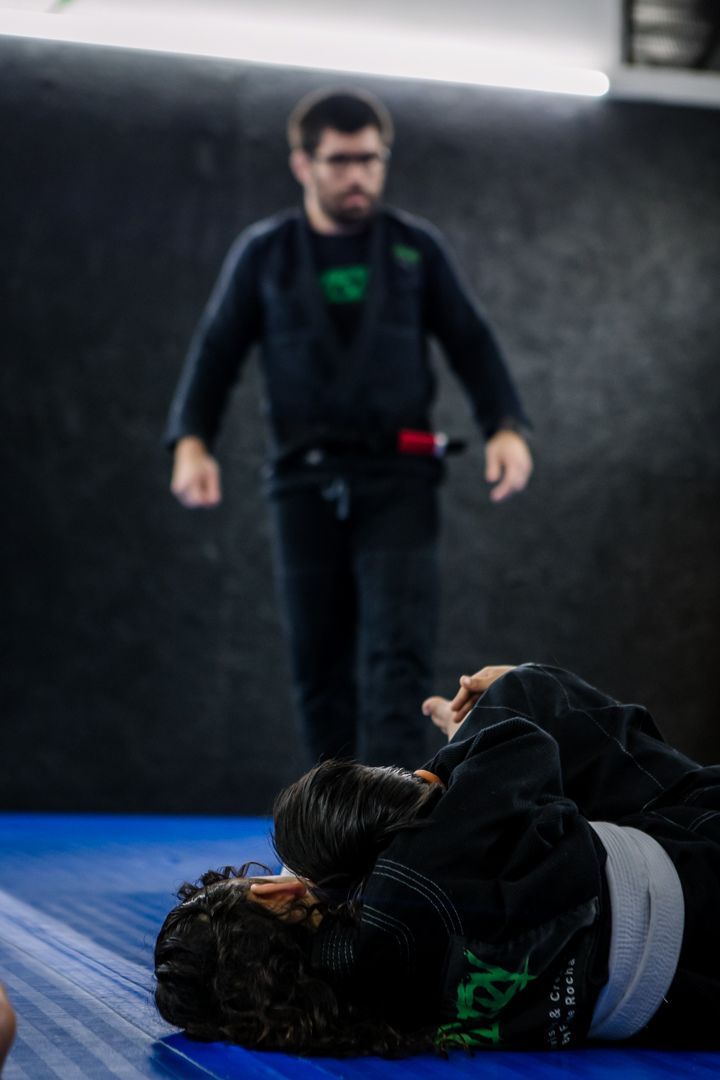
We train stand-up with purpose. You learn how to lower your center of gravity, keep your feet under you, and avoid giving up easy angles. You also learn what to do if you do go down: how to protect yourself, how to frame, and how to stand up safely rather than staying stuck underneath.
That “get up safely” skill is underrated. In real life, leaving is usually the best outcome, and you can’t leave if you can’t regain your base.
Gi vs no-gi in Houston: what’s best for self-defense?
This is one of the most common questions we hear, and it’s a good one. In Brazilian Jiu-Jitsu, gi training uses a uniform with grips, while no-gi training focuses on controlling the body without cloth grips. Houston gyms often offer both because each format teaches something valuable.
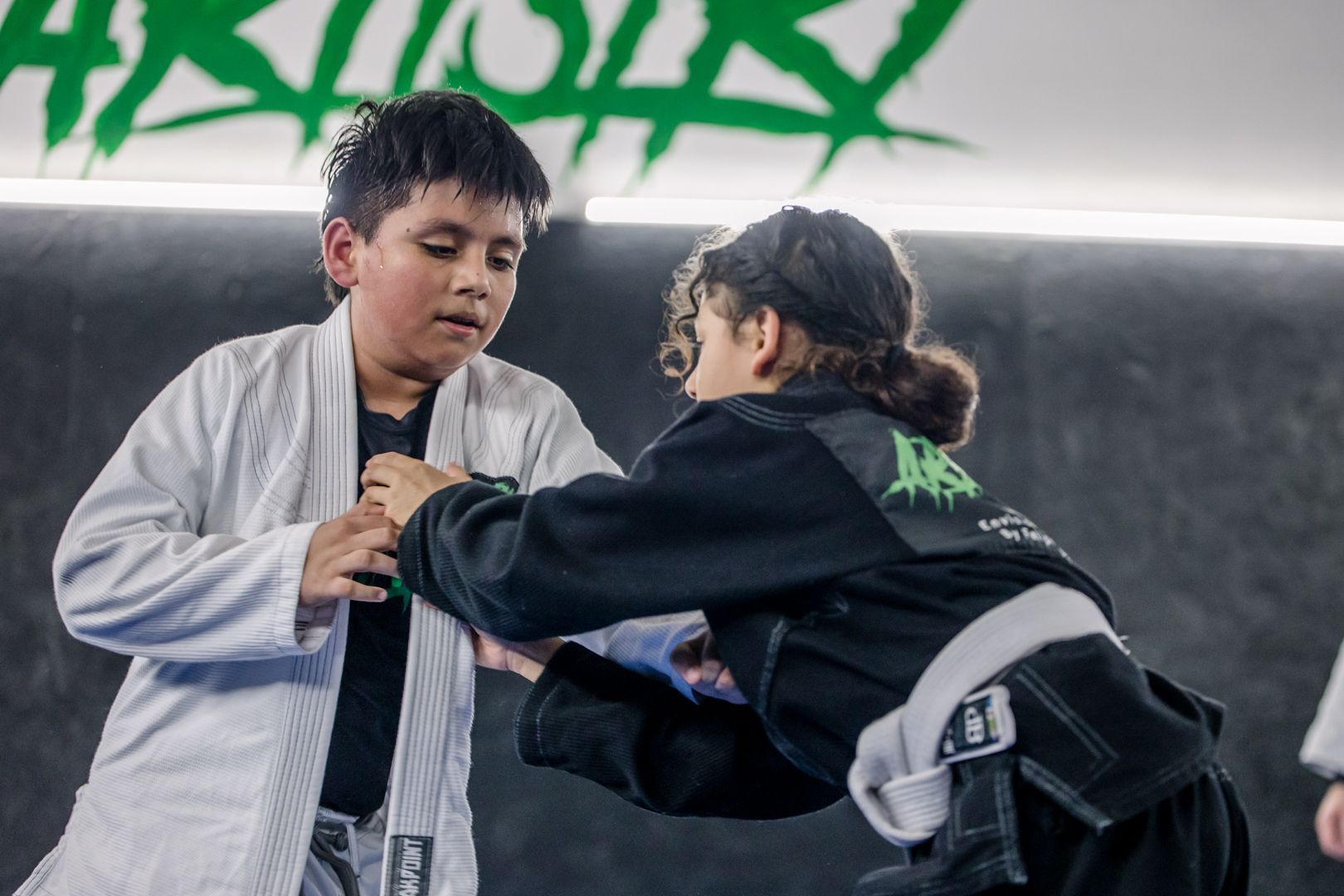
Gi can feel very “self-defense friendly” because grips simulate grabbing clothing, hoodies, jackets, and sleeves. It slows things down just enough for beginners to feel the mechanics of control. No-gi, on the other hand, can feel closer to athletic movement, sweat, and fast transitions, which shows up in real life too.
If you’re unsure where to start, we typically recommend choosing the format that you’ll attend consistently. Consistency beats perfect optimization. Over time, training both gives you a broader base: you learn to control with grips when they’re available, and you learn to control without them when they aren’t.
What a beginner class actually looks like
A lot of adults want self-defense training but worry about walking into a room full of experienced grapplers. We get it. Most people are not looking to prove anything; you just want to learn and feel safer. Our beginner-friendly structure is designed to reduce that “what am I walking into?” feeling.
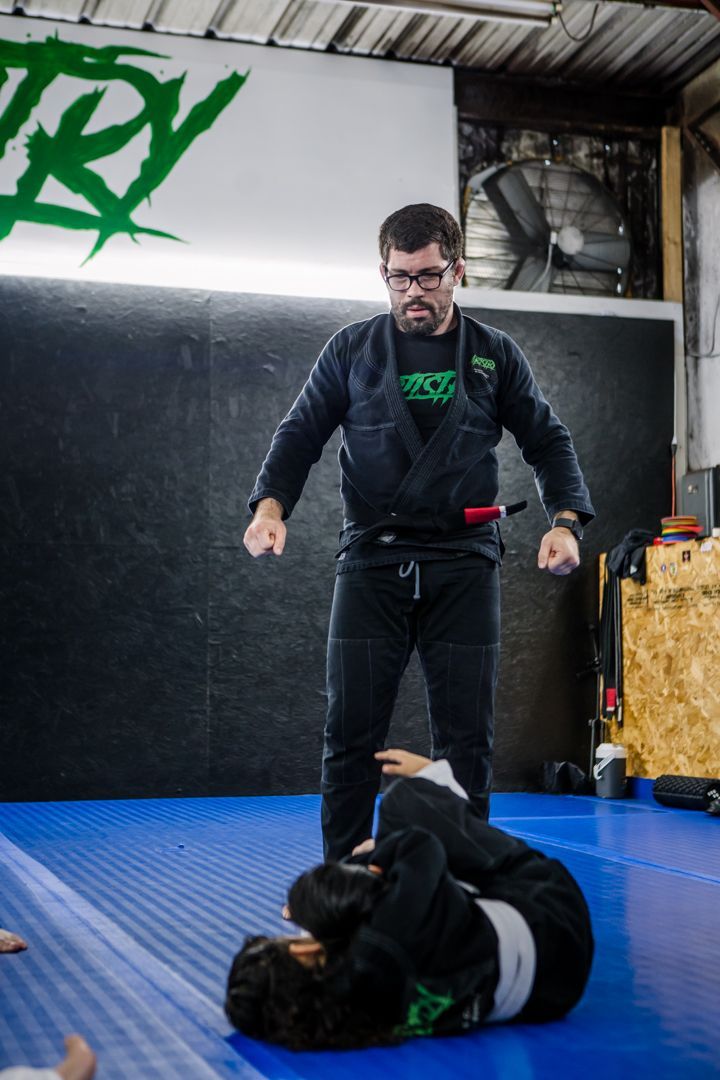
A typical class usually includes a warm-up that builds mobility and basic movement, technique instruction with step-by-step detail, and partner drilling where you practice the move in a controlled way. After that, many classes include positional sparring or light rolling, where you apply skills with rules and supervision. You can always ask questions, pause, and reset. That’s normal here.
We also keep safety at the center: tapping is respected immediately, partners are matched thoughtfully, and we coach you on how to train without muscling everything. You’ll sweat, but you shouldn’t feel like you survived something. You should feel like you learned something.
How long it takes before BJJ feels useful for self-defense
People want an honest timeline, and we respect that. You can learn a few high-value skills quickly: basic frames, how to protect your neck, how to escape common holds, and how to stand up safely. Many students start feeling “less helpless” within the first month because they understand what to do when someone closes distance.
The deeper confidence comes from repetition under pressure. As you train, your reactions get cleaner and your breathing stays steadier. You start recognizing positions the way you recognize traffic patterns: you see problems earlier, and you don’t freeze as easily.
If your goal is self-defense, training two to three times per week is a strong rhythm for most adults. One day a week can help, but progress will feel slower, especially with timing-based skills like escapes and balance recovery.
Women’s self-defense and why BJJ fits the problem set
Women often come to training wanting practical, reality-based skills, not a performance. Brazilian Jiu-Jitsu lines up well with that goal because it focuses on escaping holds, controlling from bad positions, and using leverage when strength differences are real.
We coach awareness, boundary-setting, and de-escalation as part of the broader self-defense conversation, but the physical training matters because it gives you options when distance collapses. On the mat, you learn how to frame against pressure, how to create space with your hips, and how to move from bottom positions without panicking. That’s not theory. It’s a skill you build through reps.
We also keep the learning environment respectful and structured. That means clear expectations, thoughtful partner selection, and coaching that prioritizes technique over ego. When people feel safe to learn, progress happens faster.
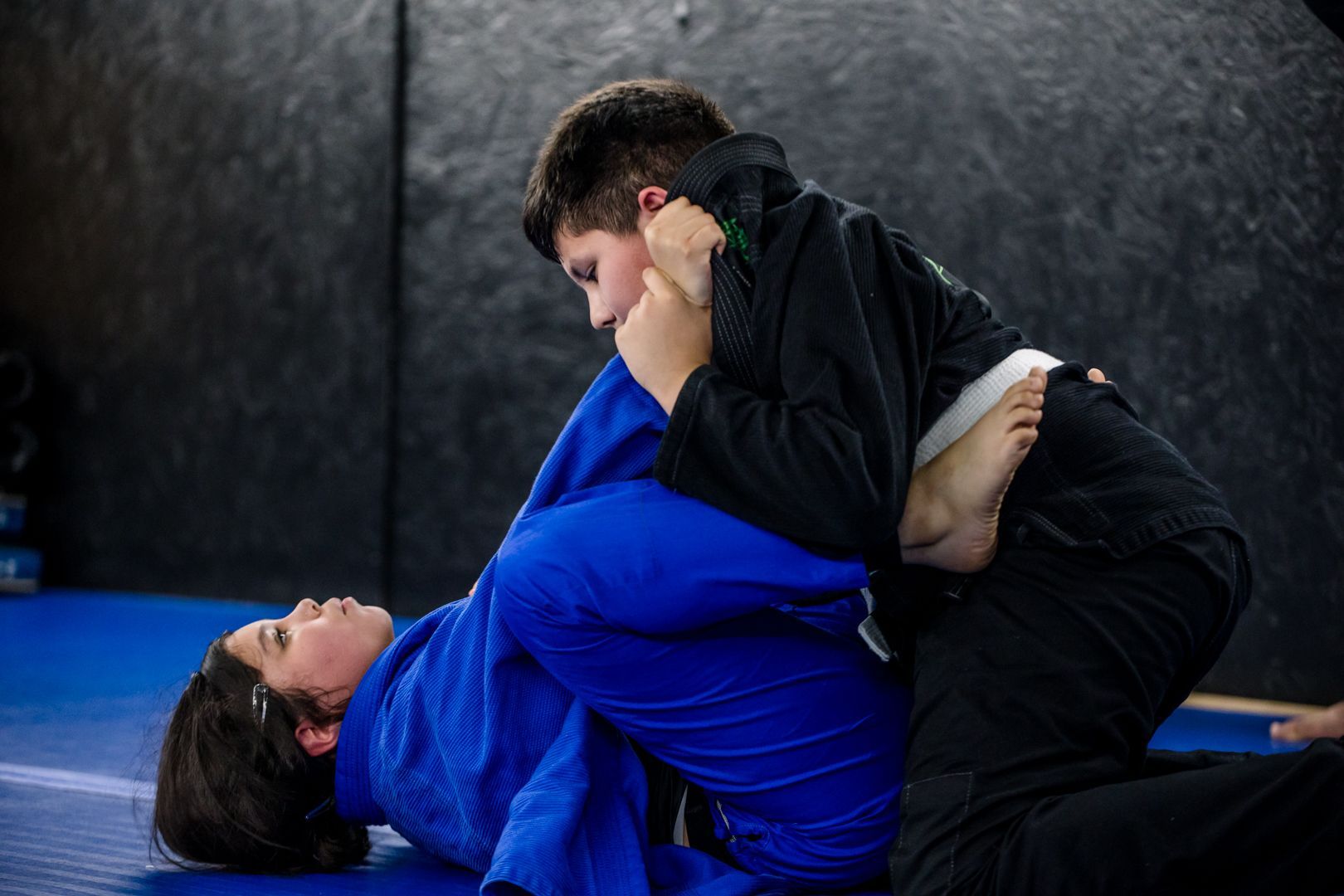
Kids training: confidence, safety, and age-appropriate structure
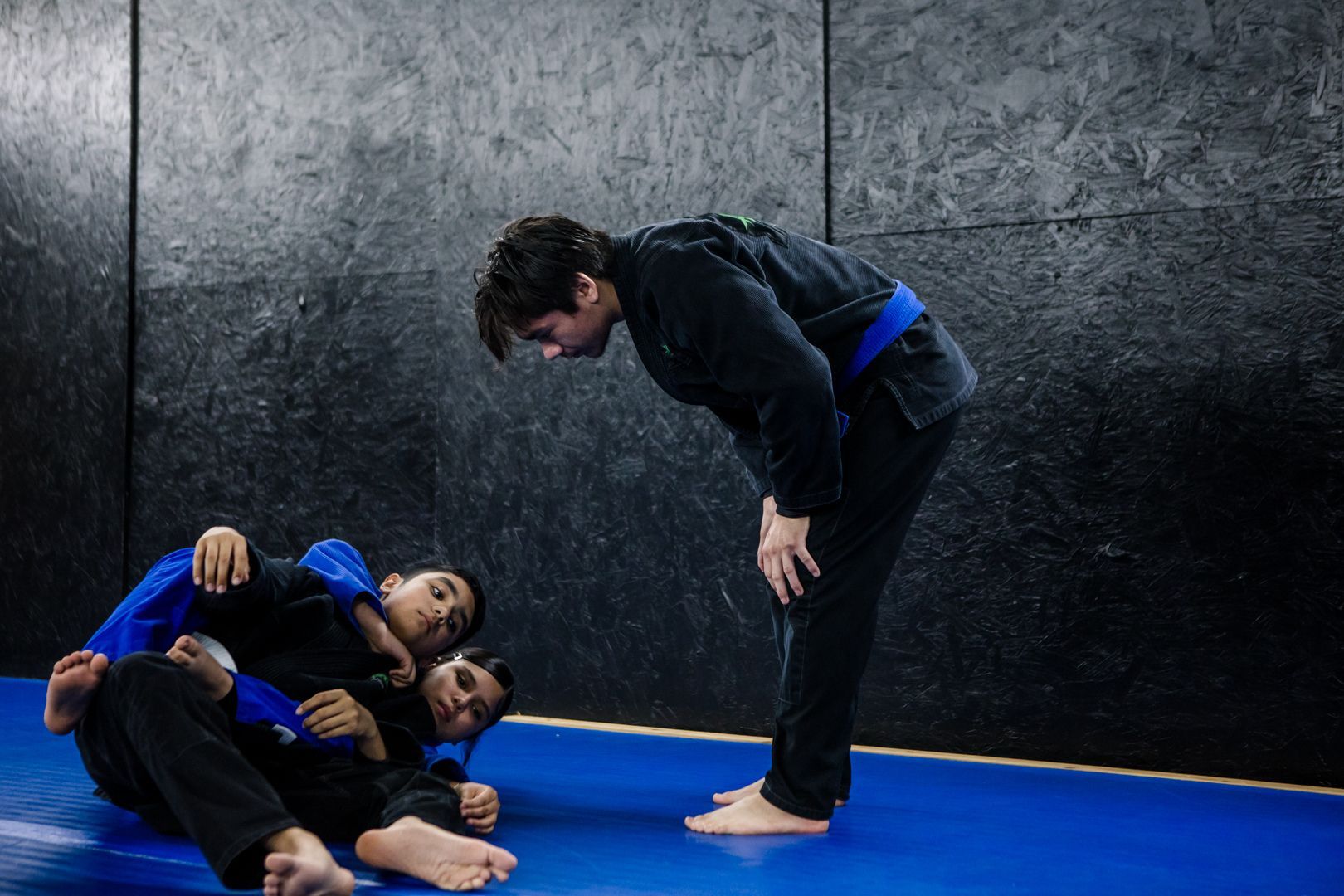
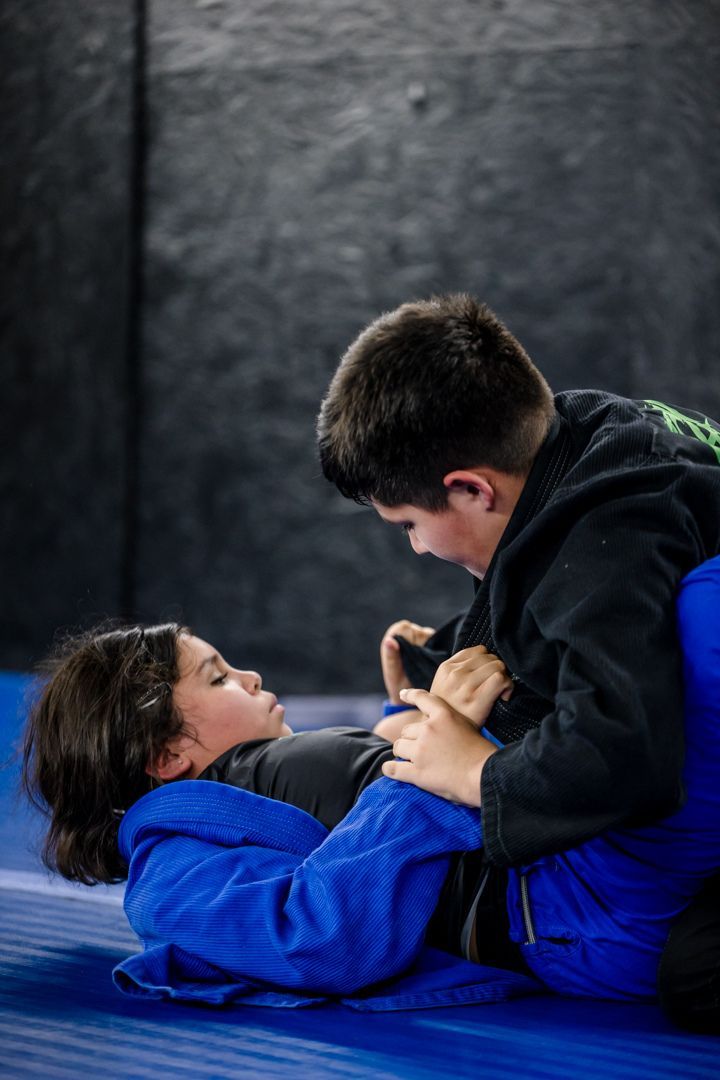
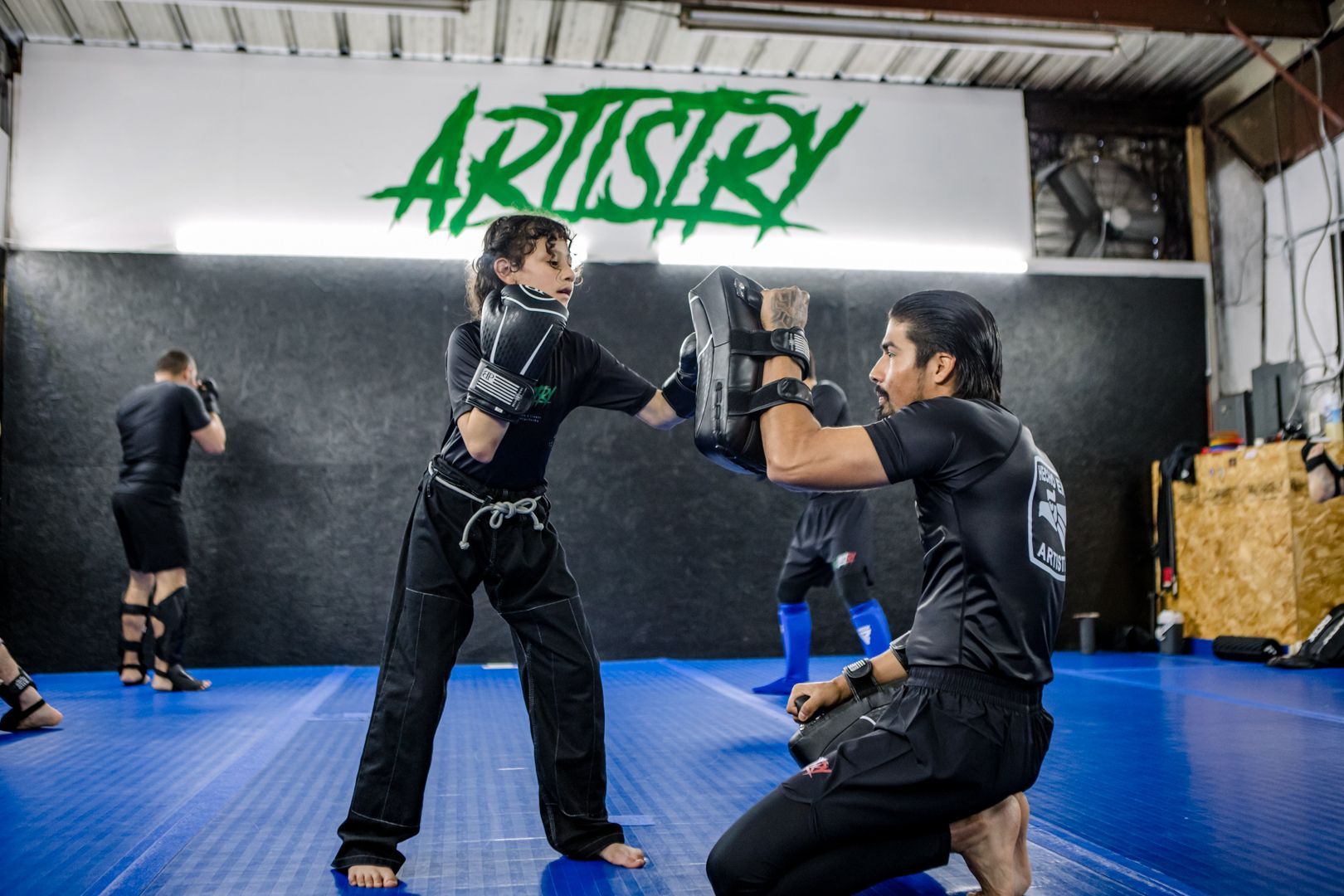
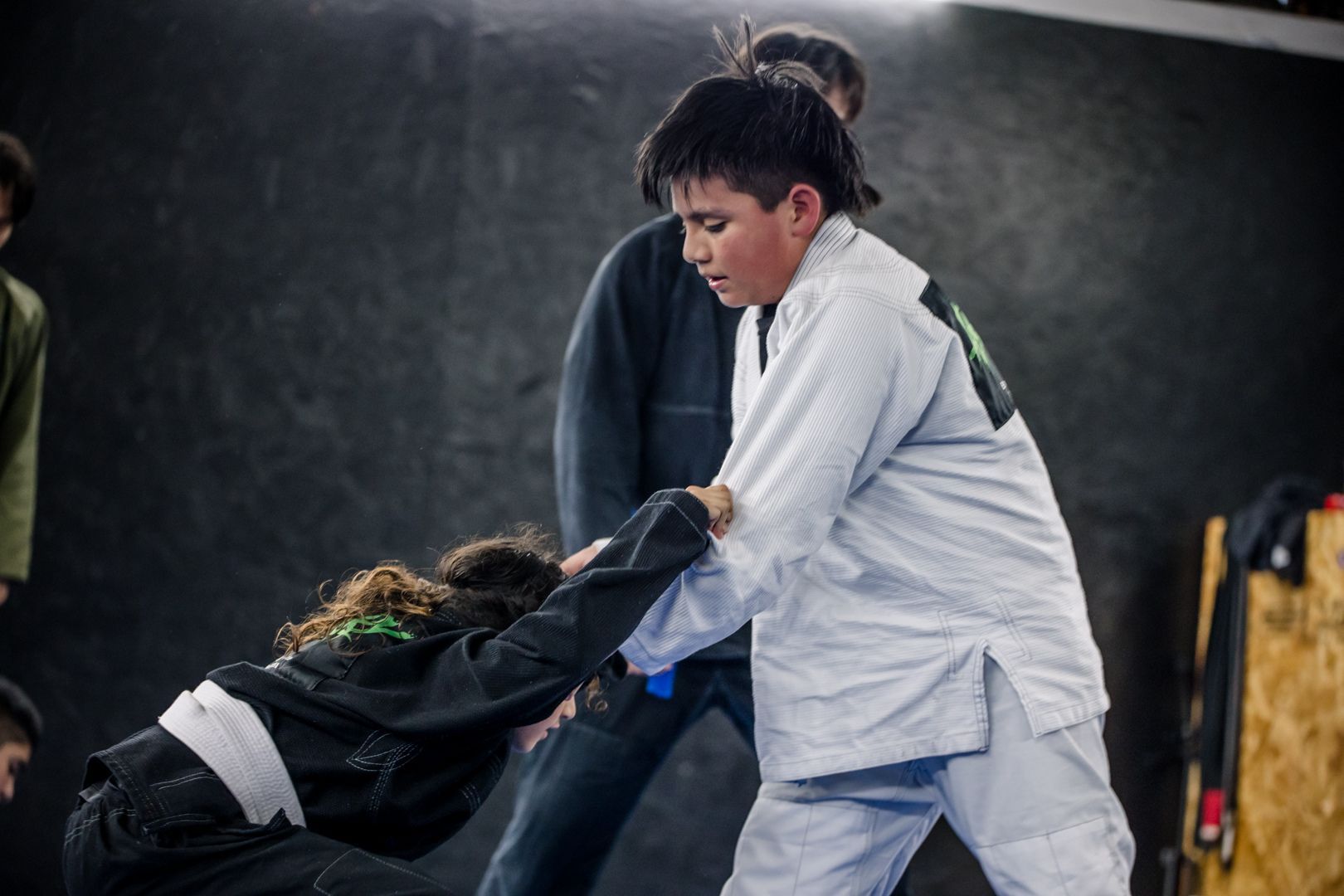
Parents in Houston are busy, and you don’t want guesswork when it comes to your child’s safety. Kids Jiu-Jitsu in Houston TX has grown because it checks multiple boxes at once: physical activity, social development, discipline, and practical self-defense concepts taught in a controlled way.
Many youth programs in the Houston area start around ages 4 to 7, and we follow that general developmental reality: kids learn best when classes match attention span, coordination, and emotional maturity. We split training by age and experience so newer kids aren’t overwhelmed and more advanced kids stay challenged.
In kids classes, we emphasize:
1. Clear rules for safety and respect, including how to be a good partner
2. Movement skills like balance, falls, and controlled grappling games
3. Simple positional escapes that build calm problem-solving under pressure
4. Anti-bullying confidence through posture, voice, and composure
5. Gradual progression so kids feel proud without feeling pushed too fast
And yes, we keep it safe. Close supervision, structured drills, and controlled sparring are non-negotiable. Kids should leave class energized and more confident, not banged up.
Do you need to get in shape before you start?
No. Training is how you get in shape. Brazilian Jiu-Jitsu meets you where you are, and we scale intensity based on your current ability. If you’re returning to fitness after a long break, we’ll help you build a foundation without burning you out. If you’re already active, you’ll still find new challenges because grappling uses strength and endurance differently than running, lifting, or cycling.
A small note that surprises beginners: you’ll feel mental fatigue too. Learning positions, timing, and pressure is like learning a new language with your body. That’s normal, and it’s part of why BJJ builds focus along with fitness.
Why Houston keeps choosing Brazilian Jiu-Jitsu in Houston for practical training
Houston has a strong martial arts culture, and families often want training that’s both effective and sustainable. Brazilian Jiu-Jitsu in Houston stands out because it’s not dependent on athletic gifts or perfect conditions. You can train as an adult beginner, a working parent, a teen, or a kid and still make real progress.
We also see modern trends improving the training experience: more no-gi availability, more takedown emphasis, better class structure, and smarter approaches to recovery and tracking. The result is that beginners get clearer pathways. You’re not left guessing what to do next or how to train safely.
At the end of the day, self-defense is a skill set. It’s built through consistent practice, clear coaching, and a room where you can make mistakes without getting punished for it.
Ready to Begin
If you want self-defense that’s practical, calm, and built around control, Brazilian Jiu-Jitsu is a strong fit for life in Houston. We keep the training realistic while still making it approachable for beginners, and we support adults, teens, and families with a structure that helps you stay consistent.
At
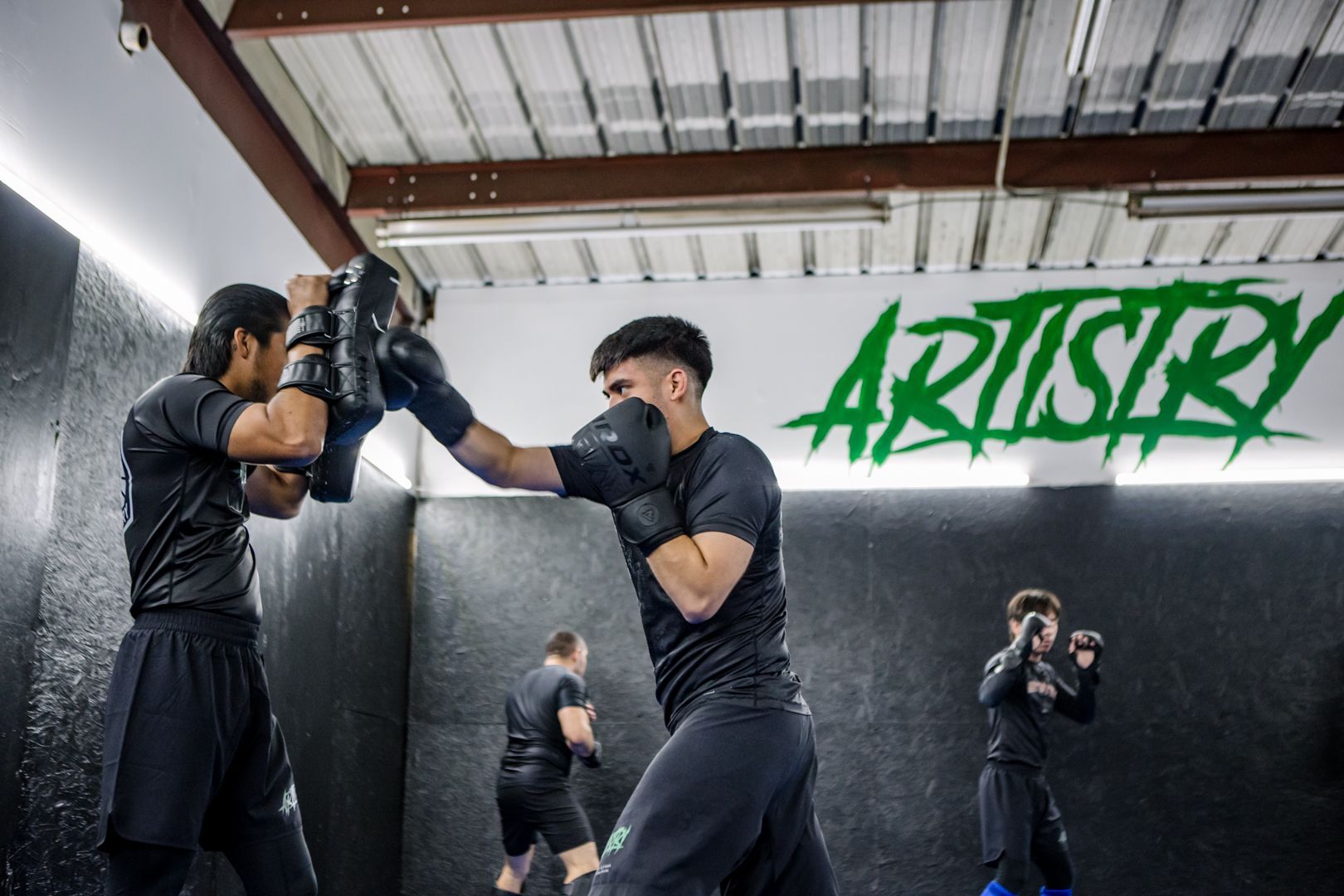
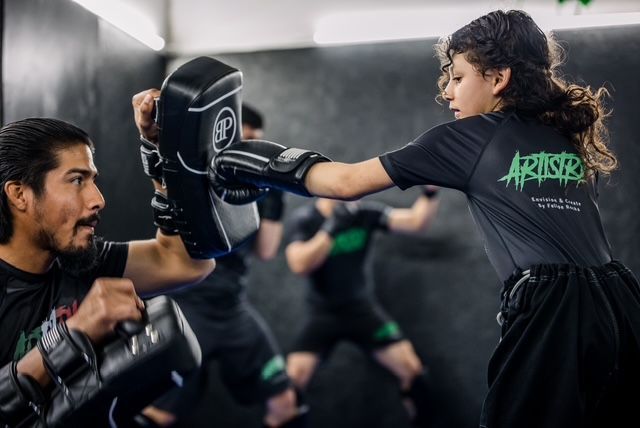
Artistry BJJ, we focus on skill development you can feel in your posture, your awareness, and your ability to stay composed under pressure. When you’re ready, we’d love to help you take the first step and see what training feels like in person.
Experience how
Brazilian Jiu-Jitsu builds confidence, discipline, and resilience at Artistry BJJ.